
24/7 Emergency Storm Damage Restoration in Newark
24/7 emergency storm damage restoration in Newark, NJ. IICRC-certified, insurance billing accepted. Call (844) 808-8838.
Our IICRC-certified technicians are dispatched from our Fair Lawn, NJ headquarters and are typically on-site in Newark within 60 minutes of your call.
Storm damage in Newark after a line of severe weather moves through? Call (844) 808-8838 and we answer 24/7. Wind-driven rain and downed limbs hit Newark’s dense pre-war neighborhoods hard, and the Passaic River’s low-lying banks near the Ironbound mean storm surge and overland flooding often arrive within hours of the first downpour. We get crews moving on board-up, tarping, and water extraction before the next band of weather rolls in.
Why Newark Properties See Storm Damage Issues
Newark’s combined sewer system was built for a smaller, drier city, and when a storm drops a few inches of rain in a short window, those lines back up into basements across Weequahic, Vailsburg, and University Heights alike. Add in the Ironbound’s low elevation along the Passaic, and you get a neighborhood where storm surge and river overflow show up in the same event, sometimes before the wind damage upstairs has even been assessed. On the housing side, Newark’s stock is mostly pre-war: tight-set brick multifamilies, frame two- and three-families with original rooflines, and the grander colonials in Forest Hill with slate or aging asphalt shingle roofs that weren’t built for sustained straight-line winds. A missing shingle or a cracked chimney flashing on one of these roofs can let a storm’s rain load find its way into a third-floor ceiling within a single event, and because these buildings sit close together, one failed gutter or downspout routinely sends water into the foundation of the building next door too.
Our Storm Damage Restoration Process in Newark
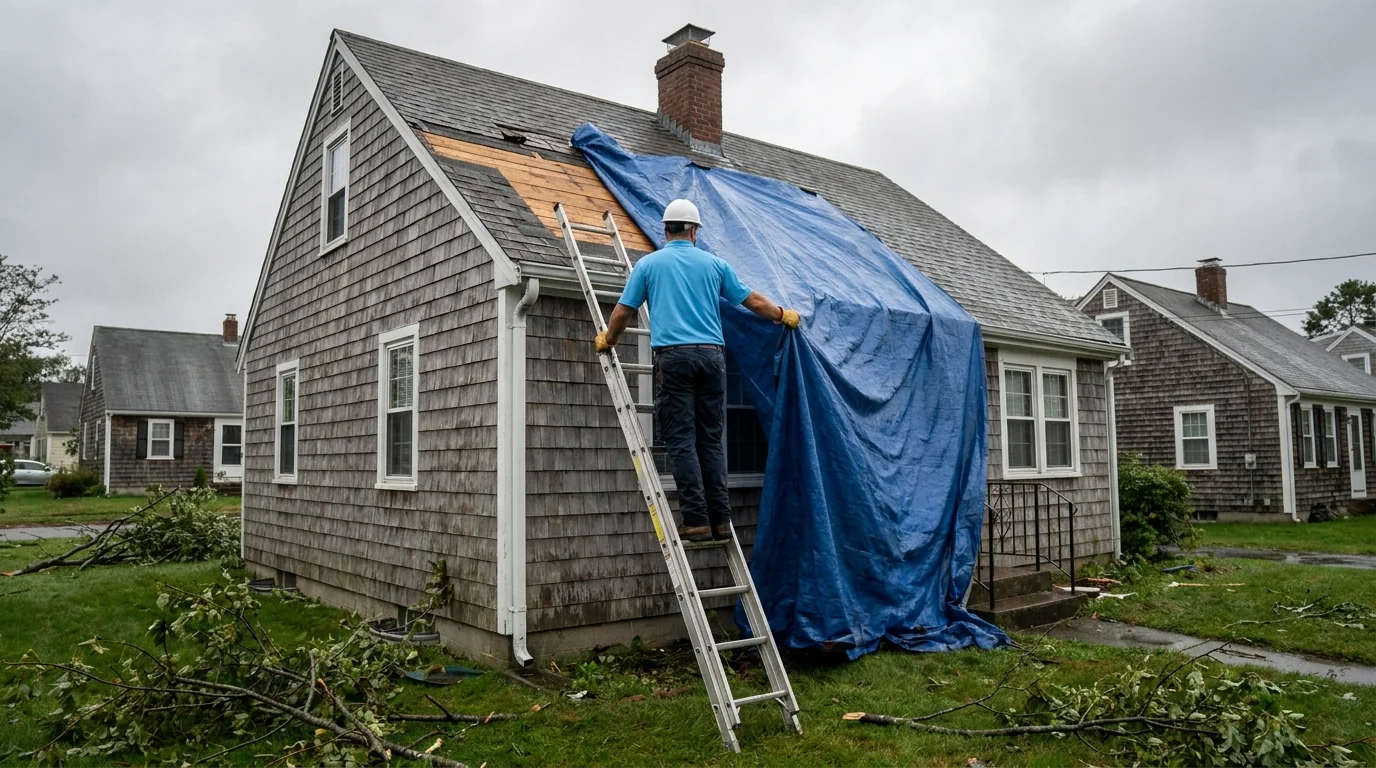
First call is triage: we need to know if the roof envelope is still holding, whether water is actively entering, and whether downed trees or branches have compromised structural members or electrical service. Emergency board-up and tarping go up first to stop the bleeding, particularly on the exposed brick parapets common on Downtown Newark’s older commercial buildings and the steep gable ends you’ll find on Forest Hill’s colonials. From there we extract standing water, pull wet insulation and drywall that won’t dry in place, and set drying equipment calibrated for Newark’s older wall assemblies, plaster and lath hold moisture longer than modern drywall and need extended drying cycles to avoid trapping water behind the surface. Tree and debris removal from roofs and yards happens alongside the drying phase rather than after it, since leaving a fallen limb on a compromised roof invites a second collapse before the first repair is even scheduled.
Newark Insurance & HOA Coordination
Most Newark storm claims we see involve a mix of wind damage to the roof and water intrusion from either rain entry or sewer backup, and carriers often want those documented as separate causes of loss even when they happened in the same storm. We photograph and log each separately, roof and siding damage, interior water intrusion, tree impact, so the claim isn’t contested on causation later. For multifamily owners and property managers in Downtown Newark’s apartment stock or the university-adjacent buildings near University Heights, we provide the kind of itemized, insurance-ready documentation that satisfies both a homeowner’s policy and a commercial landlord’s coverage.
Local note
In the Ironbound, storm response isn’t just about the building, it’s about staging. Streets like those near the rail corridor and the warehouses east of Newark Penn Station can flood at the curb even when the building itself stays dry, which means our trucks sometimes have to stage a block or two away and run hose and equipment in on foot. We check real-time street flooding before dispatch on any address in the 07105 ZIP so crews aren’t stuck trying to drive through standing water to reach a job.
If a storm has left Newark’s roofs, trees, or basements in rough shape, don’t wait for the next band of rain to make it worse. The Restoration Group is an IICRC Certified Firm, licensed as a New Jersey Home Improvement Contractor, and reachable 24/7 at (844) 808-8838 for storm damage restoration anywhere from the Ironbound to Forest Hill.
Serving Newark from our Fair Lawn headquarters — ★ 4.8 · 171 Google reviews
“Prompt, knowledgeable, skillful and honest. Highly recommend. They remediated within 24 hours. Total peace of mind restored. Worth every penny.” - Anne, October 2026Read our reviews on Google →
Storm Damage Restoration in Newark: Service Coverage
Frequently Asked Questions
How fast can you arrive for storm damage restoration in Newark?
How fast can you get a tarp on a Forest Hill colonial after wind damage?
Does the Ironbound flood differently than the rest of Newark during storms?
What's different about drying out a pre-war two-family in University Heights versus a newer build?
Are commercial buildings near Newark Penn Station and Downtown Newark at higher risk during severe weather?
How do you handle insurance documentation when a Newark storm causes both wind and sewer backup damage?
Storm Damage Restoration response in Newark
Most Newark calls see a technician on-site within 60 minutes from our Fair Lawn headquarters.