
24/7 Emergency Storm Damage Restoration in Cranford
24/7 emergency storm damage restoration in Cranford, NJ. IICRC-certified, insurance billing accepted. Call (844) 808-8838.
Our IICRC-certified technicians are dispatched from our Fair Lawn, NJ headquarters and are typically on-site in Cranford within 60 minutes of your call.
Storm damage emergency in Cranford? We answer 24/7. When wind, hail, or river overflow hits a Cranford colonial or cape, water doesn’t wait for business hours and neither do we. Cranford’s low-lying blocks near the Riverside Drive area and the stretch along Rahway River Parkway experience storm damage differently than most of Union County: one side of town floods from the river itself, the other from storm sewers that simply can’t keep up. Call (844) 808-8838 and we start documenting and stabilizing the loss right away.
Why Cranford Floods Differently Than Its Neighbors
Cranford earned the nickname “Venice of New Jersey” because the Rahway River threads directly through town, and that charm comes with a flood history few surrounding towns share. Floyd in 1999, Irene in 2011, and Ida in 2021 each put entire neighborhoods underwater, and most longtime owners here have lived through at least one of those events. Riverside-adjacent blocks take on water straight from the river channel, while Downtown Cranford, Sunny Acres, Cranford West, and Lincoln Park East more often flood when storm sewers back up faster than they can drain. Layer on a housing stock that’s mostly 1900s to 1940s colonials and capes with full basements, and you get foundations, sump systems, and framing that were never built for the storm volumes the region sees now.
Our Storm Damage Restoration Process in Cranford
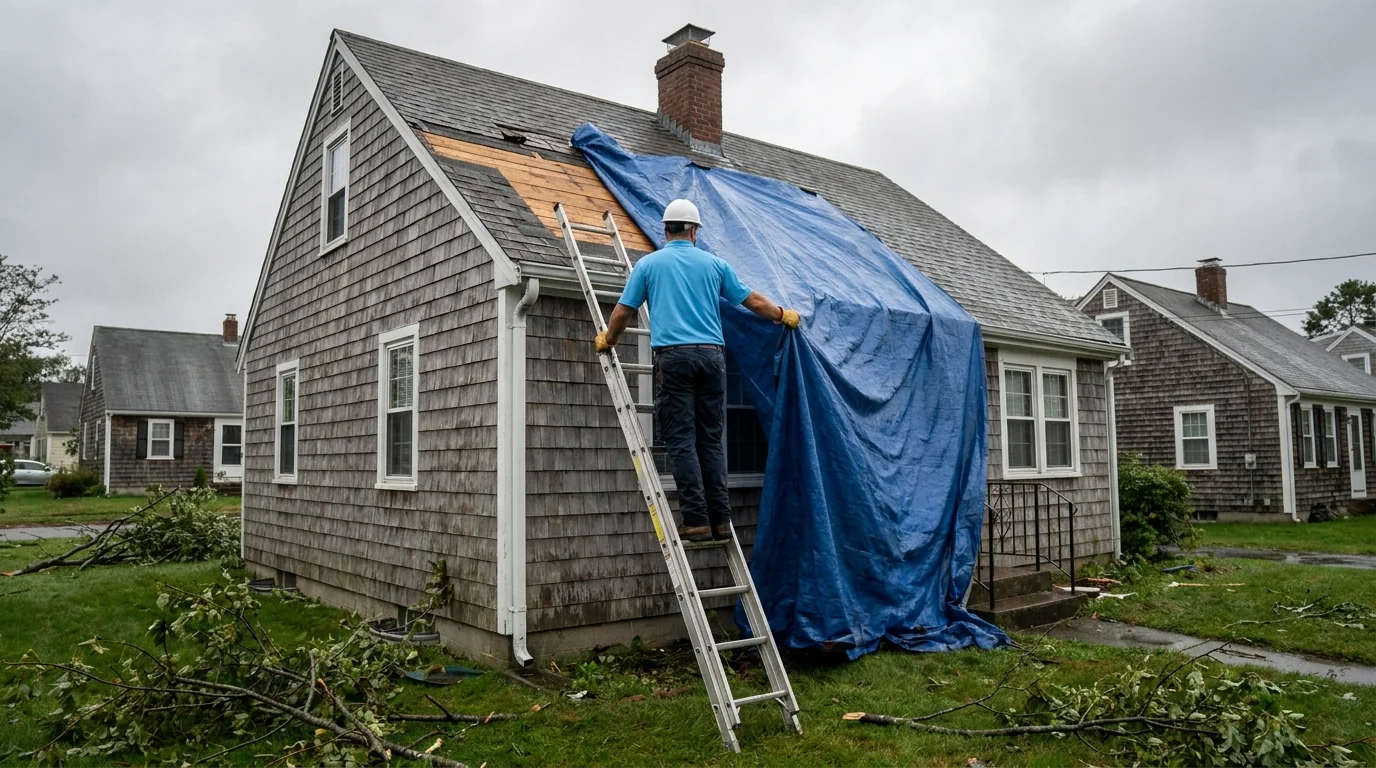
We start with a walkthrough and photo record of every affected area, roof, siding, windows, basement, because that documentation matters later for a flood claim. If the storm has compromised a roofline or blown out a window, we board up or tarp before anything else to stop secondary damage. Basement water comes out next, pumped and extracted, with moisture mapping across the slab, framing, and foundation walls so nothing gets missed behind finished walls or under flooring. Fallen limbs and storm debris, common after wind events near the tree canopy around Nomahegan Park, get cleared as part of the same visit when they’re blocking access or sitting against the structure. Drying follows the IICRC S500 standard, with equipment placement adjusted for the masonry and plaster common in Cranford’s older homes, since those materials hold and release moisture more slowly than modern drywall and framing.
Cranford Insurance & NFIP Coordination
Because so much of Cranford sits in a flood-prone corridor, many homeowners carry NFIP flood coverage in addition to a standard homeowner’s policy, and the two often need separate documentation. We log moisture readings, photograph damaged materials before removal, and keep a written record a carrier or NFIP adjuster can actually use, rather than a vague description after the fact. The Restoration Group is a NJ Licensed Home Improvement Contractor through the Division of Consumer Affairs, so the paperwork side of a storm claim moves the same way the physical work does: methodically, not rushed.
Local Note
Homes near the Cranford Canoe Club and the older blocks along the Riverside Drive area can see the Rahway rise over its banks within a few hours of heavy rain upstream, often faster than the water looks like it’s moving through downtown. On 1920s and 1930s foundations in that corridor, we check for lateral seepage through old parging and foundation drain tile even when the basement floor still looks dry, because pressure from a rising river can push moisture sideways through the wall before it ever reaches a floor drain or sump pit. Skipping that check is how a homeowner ends up with a mold problem two weeks after the water everyone could see was already gone.
If a storm has left standing water, a torn-off roof section, or downed trees on a Cranford property, in 07016 or anywhere nearby, the longer it sits the more it costs to fix. The Restoration Group handles storm damage restoration for Cranford homes from Downtown to the Riverside Drive area, and we’re reachable around the clock to get a crew moving.
Serving Cranford from our Fair Lawn headquarters — ★ 4.8 · 171 Google reviews
“The company was very prepared and professional. They were prompt with coming out to inspect the water damage that occurred and had the team come out the next day. They even wore booties in the house. They cut out all areas of damage, sprayed and use numerous fans and humidifiers in the wet area. I…” - Melanie, October 2026Read our reviews on Google →
Storm Damage Restoration in Cranford: Service Coverage
Frequently Asked Questions
How fast can you arrive for storm damage restoration in Cranford?
How does storm damage restoration differ for homes near the Riverside Drive area versus Downtown Cranford?
Does Cranford's flood history affect how you document storm damage for insurance claims?
What's the typical process for drying out a flooded basement in a Cranford cape or colonial?
Are homes in Sunny Acres or Cranford West more prone to storm sewer backup than river flooding?
Can you handle tree and debris damage near Nomahegan Park or along Rahway River Parkway after a storm?
Storm Damage Restoration response in Cranford
Most Cranford calls see a technician on-site within 60 minutes from our Fair Lawn headquarters.