Mold Remediation in Newark
24/7 mold remediation in Newark, NJ. IICRC-certified, insurance billing accepted. Call (844) 808-8838.
Our IICRC-certified technicians are dispatched from our Fair Lawn, NJ headquarters and are typically on-site in Newark within 60 minutes of your call.
Mold remediation calls in Newark rarely start with someone finding mold first. They start with a musty smell in a basement unit, a landlord noticing a tenant’s complaint about a stained ceiling in Downtown Newark, or a homeowner in the Ironbound pulling up water-stained carpet after a storm and finding the padding underneath still damp weeks later. Newark’s combined sewer system backs up into basements during heavy rain, and that trapped moisture, sitting in wall cavities and under flooring, is exactly what mold needs to take hold within a day or two.
Why Newark’s Housing Stock Feeds Mold Growth
Newark is mostly pre-war stock: brick multifamily buildings, frame two- and three-families packed close together, and the larger colonials in Forest Hill with lath-and-plaster walls. That density means a moisture problem in one unit doesn’t stay contained. Shared risers, party walls, and common basements let mold spread between units before anyone upstairs notices a smell. In neighborhoods like Weequahic and University Heights, finished basements are common additions to older homes, and they’re often the least ventilated part of the house, which is exactly where spores find still air and a steady moisture source to colonize.
Combined sewer overflow during heavy storms is a citywide issue, not just an Ironbound problem, but the Ironbound’s low elevation along the Passaic River means water sits longer there. A basement that takes on an inch of backup water after a storm can look dry on the surface within a few days. The framing and subfloor underneath often aren’t dry at all, and that’s where remediation work actually starts.
Our Mold Remediation Process in Newark
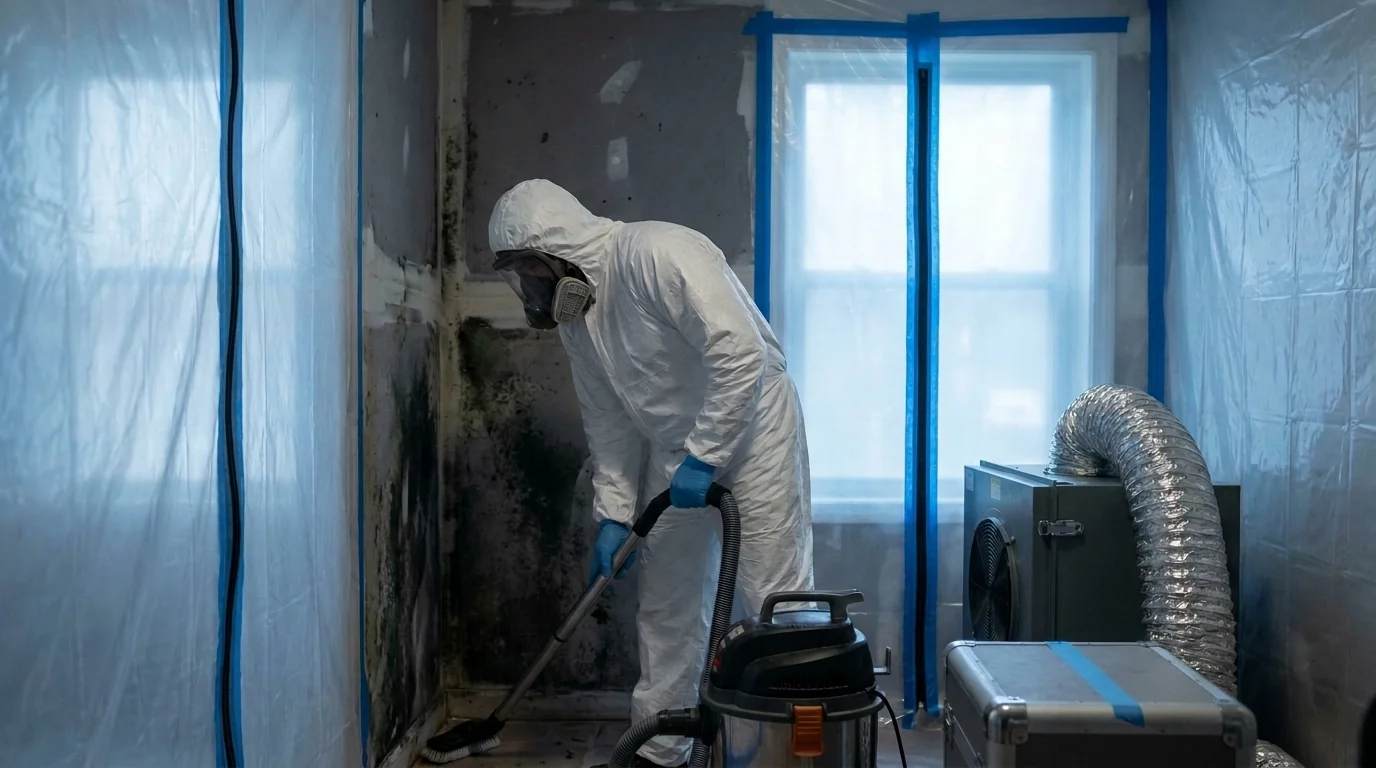
We start with a visual and moisture-meter inspection of the affected area and anything it touches: adjoining studs, subfloor, baseboards, and shared walls in multifamily buildings. Once we’ve mapped the extent, we set up containment with negative air pressure and HEPA filtration so spores don’t travel into occupied units or hallways, which matters more in Newark’s attached housing than it would in a detached suburban home.
Affected porous materials, drywall, insulation, carpet padding, get removed and bagged for disposal. Non-porous and structural materials are treated with antimicrobial solutions and dried in place following the IICRC S520 mold remediation standard. In Forest Hill’s older colonials, plaster walls hold moisture longer than drywall does, so drying timelines there tend to run longer even after visible mold is gone. We close out with a final inspection to confirm the area is dry and the containment can come down.
Newark Insurance & Documentation
Most Newark mold claims we see trace back to a covered event: a burst pipe, a sewer backup, or storm flooding, rather than mold as a standalone peril, which is how most homeowner and landlord policies read. We document the source of moisture, the extent of the damage, and the remediation steps taken so the paperwork lines up with what an adjuster expects to see. For property managers and institutional clients near the university corridor or the arena district, we provide the same documentation in a format that works for compliance files, not just insurance claims.
Local note
In Ironbound rowhouses built close to the property line, there’s often little to no ventilation gap between neighboring foundations. Mold can travel along a shared party wall and show up in a neighboring unit’s closet or bedroom corner before it’s visible on the original side, which is why we always ask to check the adjoining unit when we’re working a party-wall building in that part of the city.
Mold remediation in Newark isn’t just about what’s visible on a wall, it’s about understanding how water moves through this city’s older, tightly packed housing stock. The Restoration Group is IICRC Certified Firm #210213 and licensed as a Home Improvement Contractor through the NJ Division of Consumer Affairs, and we answer calls 24/7 for Newark properties from the Ironbound to Vailsburg. Call (844) 808-8838 to get a containment and removal plan started.
Serving Newark from our Fair Lawn headquarters — ★ 4.8 · 171 Google reviews
“Prompt, knowledgeable, skillful and honest. Highly recommend. They remediated within 24 hours. Total peace of mind restored. Worth every penny.” - Anne, October 2026Read our reviews on Google →
Mold Remediation in Newark: Service Coverage
Frequently Asked Questions
How fast can you arrive for mold remediation in Newark?
How does Newark's combined sewer system affect mold risk in Ironbound basements, like near 07105?
Are Forest Hill's colonial homes more prone to hidden mold behind plaster walls?
What's different about mold containment in a multifamily building in Downtown Newark or University Heights versus a single-family home?
What equipment do you use during mold containment and removal?
Will my Newark landlord or homeowner policy cover mold remediation after a sewer backup?
Will my homeowners insurance cover mold remediation in Newark?
Mold Remediation response in Newark
Most Newark calls see a technician on-site within 60 minutes from our Fair Lawn headquarters.