Mold Remediation in Manhattan
24/7 mold remediation in Manhattan, NY. IICRC-certified, insurance billing accepted. Call (844) 808-8838.
Our IICRC-certified technicians are dispatched from our Fair Lawn, NJ headquarters and are typically on-site in Manhattan within 60 minutes of your call.
Mold in a Manhattan apartment rarely stays in one unit. A slow leak behind a bathroom wall on the Upper East Side or a failed riser in a Financial District tower can wick moisture through shared plumbing chases and party walls, turning a single bathroom problem into a multi-floor remediation job before anyone notices the smell. We handle mold remediation across Manhattan’s co-ops, condos, and commercial spaces with the documentation and access coordination that vertical buildings require.
Why Manhattan Buildings See Recurring Mold Issues
Manhattan’s housing stock runs from pre-war masonry buildings with original plaster and cast iron plumbing to glass condo towers built in the last two decades, and both types grow mold for different reasons. Pre-war buildings in neighborhoods like the Upper West Side often have original risers and radiator valves that corrode from the inside, and a slow pinhole leak can saturate lath and plaster for weeks before it shows on the surface. Newer towers trade that risk for tightly sealed envelopes and recessed HVAC units, where condensation and poor ventilation in interior bathrooms create steady humidity that mold colonizes within 24 to 48 hours of a sustained moisture source. Storm surge from Sandy pushed water into basement mechanical rooms and ground-floor units across the Financial District and Lower East Side, and heavy rain events like Ida backed up drains from Harlem to Chelsea, leaving slow-drying mold behind in spaces that looked fine within a day or two of the water receding.
Our Mold Remediation Process in Manhattan
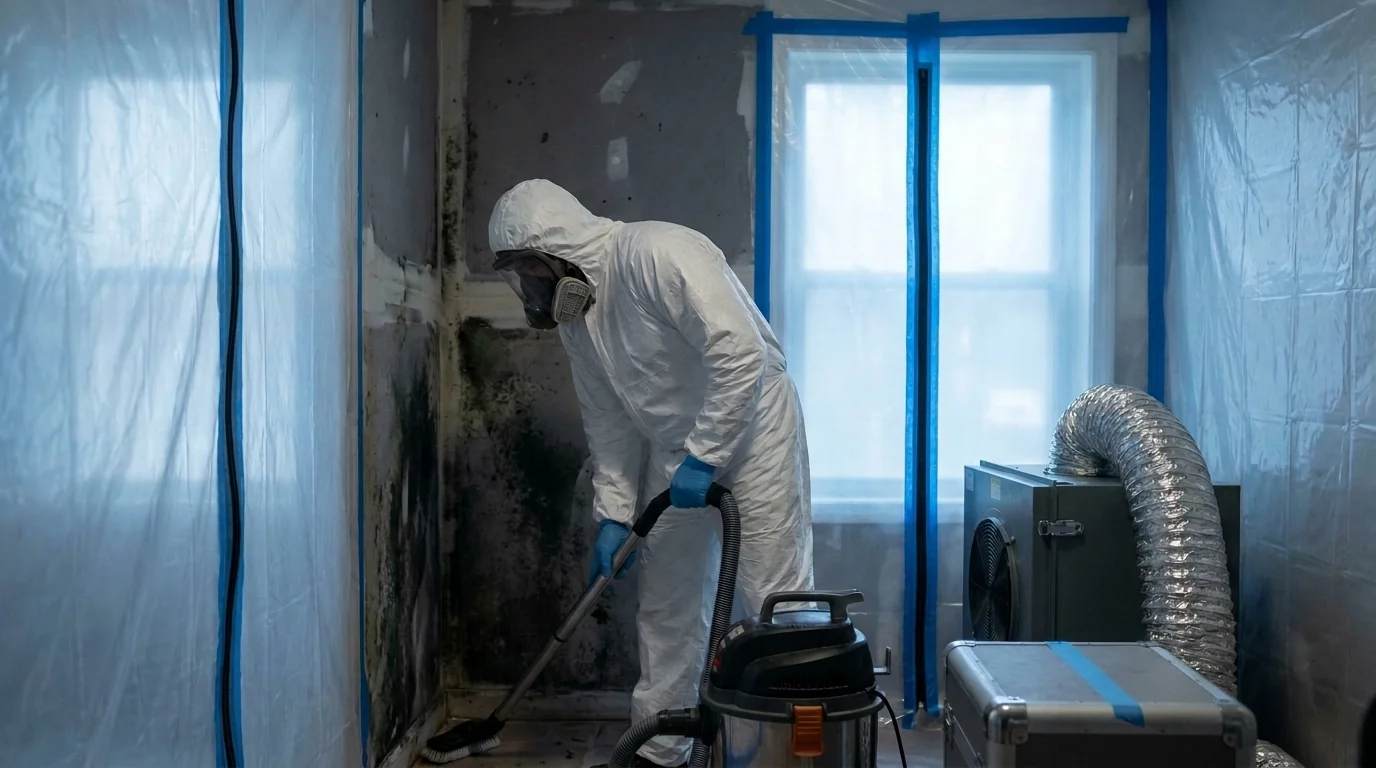
We start with a moisture map of the affected unit and any adjoining walls, floors, or ceilings, since in a building with shared structure the source is often one floor away from the visible growth. Containment goes up next, typically negative-air chambers sealed with poly sheeting at the unit’s entry points, because running fans or opening windows in a sealed high-rise corridor can spread spores into shared hallways and HVAC returns. Affected porous materials, drywall, insulation, baseboards, are removed and bagged for disposal, while structural wood and masonry are treated and dried in place per IICRC S520 guidelines. Once materials are dry and treated, we run air scrubbers with HEPA filtration through the containment zone before anyone moves furniture or contents back in, and we document moisture readings at each stage for the building file.
Manhattan Co-op, Condo & Building Management Coordination
Almost every Manhattan mold job touches building management before it touches the unit. Boards and managing agents typically want a certificate of insurance on file, a scope of work describing containment and disposal methods, and advance notice for freight elevator reservations, since passenger elevators are usually off-limits for equipment and bagged debris. We coordinate that paperwork and scheduling directly with the super or managing agent so the work doesn’t stall waiting on building sign-off, and we keep unit-by-unit moisture logs that boards and insurance carriers both tend to request when a leak has affected more than one line in the stack.
Local note
In pre-war buildings around 10021 and similar Upper East Side zip codes, plaster walls over wood lath hide moisture far longer than drywall does, which means a wall that reads dry on a surface moisture meter can still have a saturated lath cavity underneath. We probe at multiple depths in these buildings rather than relying on a single surface reading, because treating the visible plaster without addressing the lath behind it is how mold comes back in the same spot a few months later.
If you manage or own property in Manhattan and you’re dealing with a musty smell, visible growth, or a leak that’s already dried but left a mark, mold remediation is worth scheduling before a board meeting or a lease renewal forces the issue. We work with co-op boards, condo managers, and commercial tenants across the borough, and we document the job the way building management and insurance carriers expect. Call (844) 808-8838 to get a unit assessed.
Serving Manhattan from our Fair Lawn headquarters — ★ 4.8 · 171 Google reviews
“Prompt, knowledgeable, skillful and honest. Highly recommend. They remediated within 24 hours. Total peace of mind restored. Worth every penny.” - Anne, October 2026Read our reviews on Google →
Mold Remediation in Manhattan: Service Coverage
Frequently Asked Questions
How fast can you arrive for mold remediation in Manhattan?
Does my co-op board need to approve mold remediation work in a building like those on the Upper West Side?
How does mold remediation differ in a pre-war building near Central Park compared to a newer Midtown condo?
A leak from the unit above mine in the Financial District left mold on my ceiling. Who handles the claim?
What containment methods do you use for mold work in a high-rise with shared HVAC or hallways?
Are ground-floor units in Lower East Side or Chelsea buildings more prone to mold after storm flooding?
Will my homeowners insurance cover mold remediation in Manhattan?
Mold Remediation response in Manhattan
Most Manhattan calls see a technician on-site within 60 minutes from our Fair Lawn headquarters.