
Mold Remediation in Cranford
24/7 mold remediation in Cranford, NJ. IICRC-certified, insurance billing accepted. Call (844) 808-8838.
Our IICRC-certified technicians are dispatched from our Fair Lawn, NJ headquarters and are typically on-site in Cranford within 60 minutes of your call.
Cranford’s nickname, the “Venice of New Jersey,” comes from the Rahway River running straight through town, and that same water that gives the Riverside Drive area its charm is also why so many Cranford basements have seen standing water at least once since Floyd, Irene, or Ida. Mold Remediation here is rarely a standalone job. It’s almost always the second call after a flood, and the colonies we find are shaped by how long a basement sat wet and how old the house is.
Why Cranford Properties See Mold Issues
Most of the housing stock near Downtown Cranford and Cranford West was built between the 1900s and 1940s, with full basements that were never designed around modern vapor barriers or sump systems. Add a repeat-flood history that includes three named storms in the last 25 years, and you get basements where framing, subfloor, and insulation have absorbed water more than once. Mold doesn’t need a flood to take hold, either. A slow leak around a sump pump discharge line, a damp crawl space, or a finished basement near Nomahegan Park with poor airflow can colonize a wall cavity in 24 to 48 hours once conditions are right. Homes in Sunny Acres and Lincoln Park East with older cast-iron plumbing tend to show up on inspections with hidden moisture behind bathroom walls long before anyone sees visible spotting.
Our Mold Remediation Process in Cranford
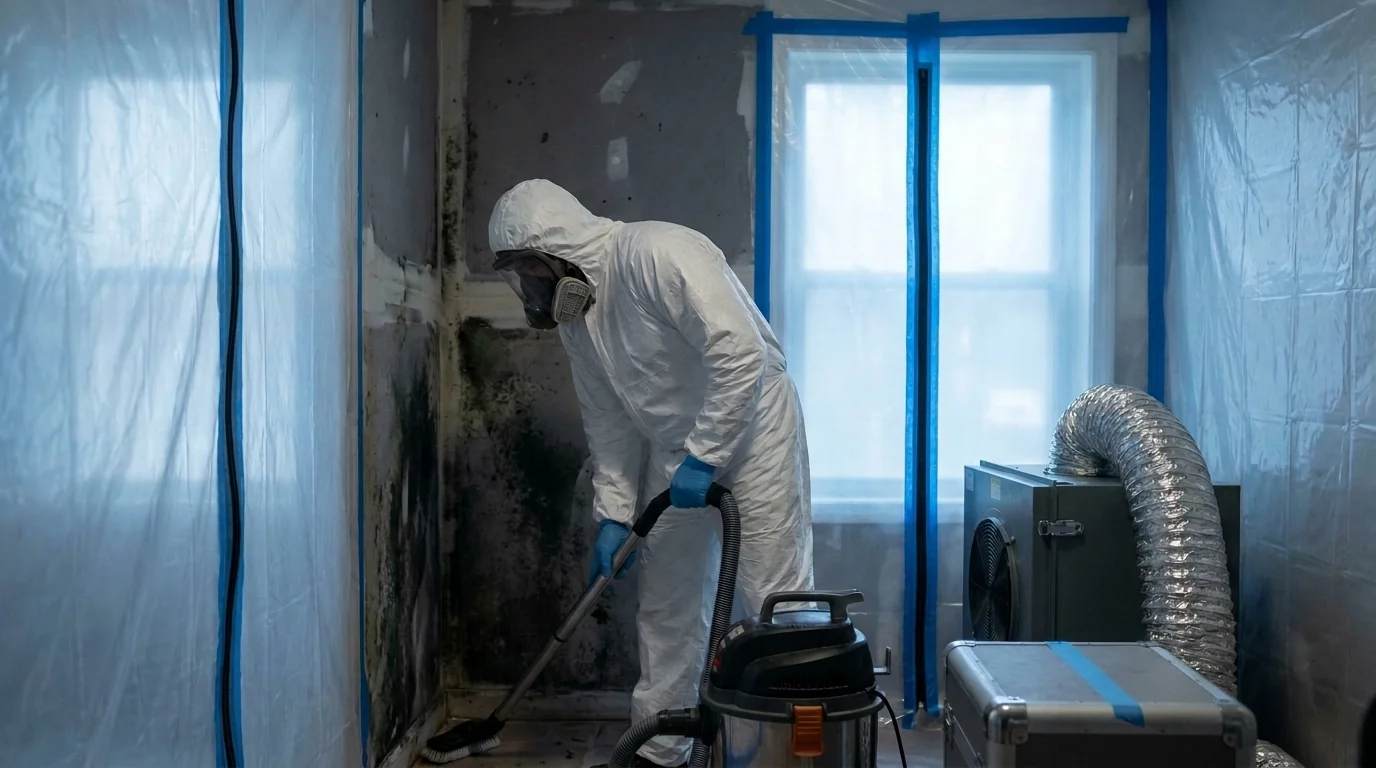
We start with containment, because an open basement stairwell in a colonial near the Rahway River Parkway is an easy way to spread spores into the living space during demo. Negative air pressure and physical barriers go up before any affected drywall, insulation, or subfloor comes out. Removal follows the IICRC S520 standard for condition and extent of contamination, and we HEPA-vacuum and wipe down surrounding surfaces rather than just the visibly affected material. In pre-1950 homes with plaster and lath, we’re more conservative about how much we pull, since plaster holds moisture differently than drywall and can mask how deep saturation goes. Once materials are out, we run air scrubbers and dehumidification matched to the room’s cubic footage, not a generic timeline, and we don’t close out a job until moisture readings in the framing are back to normal for the season.
Cranford Insurance & Claim Documentation
A lot of Cranford homeowners have filed a flood claim before, and they know that standard homeowner’s insurance usually doesn’t cover flood-driven mold the same way an NFIP policy does. We photograph and document moisture readings, affected materials, and the extraction process as we go, which matters more here than in towns without a flood history, because adjusters and NFIP claims examiners often want to see a clear line between the original water event and the mold that followed. If your property sits in a flood zone near the river or has flooded from storm sewer backup elsewhere in town, we keep that documentation organized so it supports whichever claim path applies.
Local note
A detail that doesn’t show up on a map: basements closer to the Cranford Canoe Club and the lower stretches near Droescher’s Mill tend to flood from the river itself, with silty water that leaves a different residue than the clear storm sewer backup that hits blocks farther from the water, like parts of Cranford West. That difference changes what we check first. River-flooded basements get closer inspection of sill plates and sump pits for sediment buildup, while storm sewer backup cases usually point us toward checking the floor drain and backwater valve before we even start containment.
If you’re dealing with a musty smell, visible spotting, or you just had a basement pump-out and want to get ahead of what comes next, call The Restoration Group at (844) 808-8838. We’re licensed through the NJ Division of Consumer Affairs and can walk a Cranford basement, explain what we’re seeing, and scope a remediation plan before small problems spread into finished space.
Serving Cranford from our Fair Lawn headquarters — ★ 4.8 · 171 Google reviews
“The company was very prepared and professional. They were prompt with coming out to inspect the water damage that occurred and had the team come out the next day. They even wore booties in the house. They cut out all areas of damage, sprayed and use numerous fans and humidifiers in the wet area. I…” - Melanie, October 2026Read our reviews on Google →
Mold Remediation in Cranford: Service Coverage
Frequently Asked Questions
How fast can you arrive for mold remediation in Cranford?
How does Cranford's flood history affect mold remediation in older basements?
Do you test air quality after remediation in Cranford homes?
Are Sunny Acres and Lincoln Park East homes more prone to hidden mold behind walls?
What's different about mold removal in Cranford's pre-1950 colonials and capes versus newer construction?
Will my flood insurance or homeowner's policy cover mold remediation in the 07016 area?
Mold Remediation response in Cranford
Most Cranford calls see a technician on-site within 60 minutes from our Fair Lawn headquarters.