Mold Remediation in Staten Island
24/7 mold remediation in Staten Island, NY. IICRC-certified, insurance billing accepted. Call (844) 808-8838.
Our IICRC-certified technicians are dispatched from our Fair Lawn, NJ headquarters and are typically on-site in Staten Island within 60 minutes of your call.
Mold remediation in Staten Island has to account for one thing most other boroughs don’t deal with at this scale: water on three sides and a housing stock that’s been flooding, drying, and flooding again since Hurricane Sandy in 2012. Between the East Shore’s flood history and the borough’s mix of century-old frame houses and postwar basements, mold doesn’t wait for a visible leak to take hold. If you’re smelling something musty in a St. George foursquare or seeing spotting on a South Beach ceiling, the clock is already running.
Why Staten Island Properties See Mold Issues
Staten Island’s housing stock runs the gamut: early-1900s wood-frame homes near St. George and Port Richmond, dense postwar Cape Cods and split-levels through New Dorp and Great Kills, and newer townhome clusters toward Tottenville. Almost all of them have basements or crawlspaces, and most of those basements have seen water at some point, whether from Sandy in 2012, Ida’s inland flash flooding in 2021, or just an aging cast-iron drain line backing up during a heavy nor’easter. Mold can establish itself on wet drywall, framing, or insulation within 24 to 48 hours of that kind of moisture exposure, and in a basement that stays damp between rain events, it often never fully dries out on its own. Add the humidity that comes with being surrounded by water on three sides, and interior relative humidity in older, less-ventilated homes can sit high enough year-round to keep a colony fed long after the original water source is gone.
Our Mold Remediation Process in Staten Island
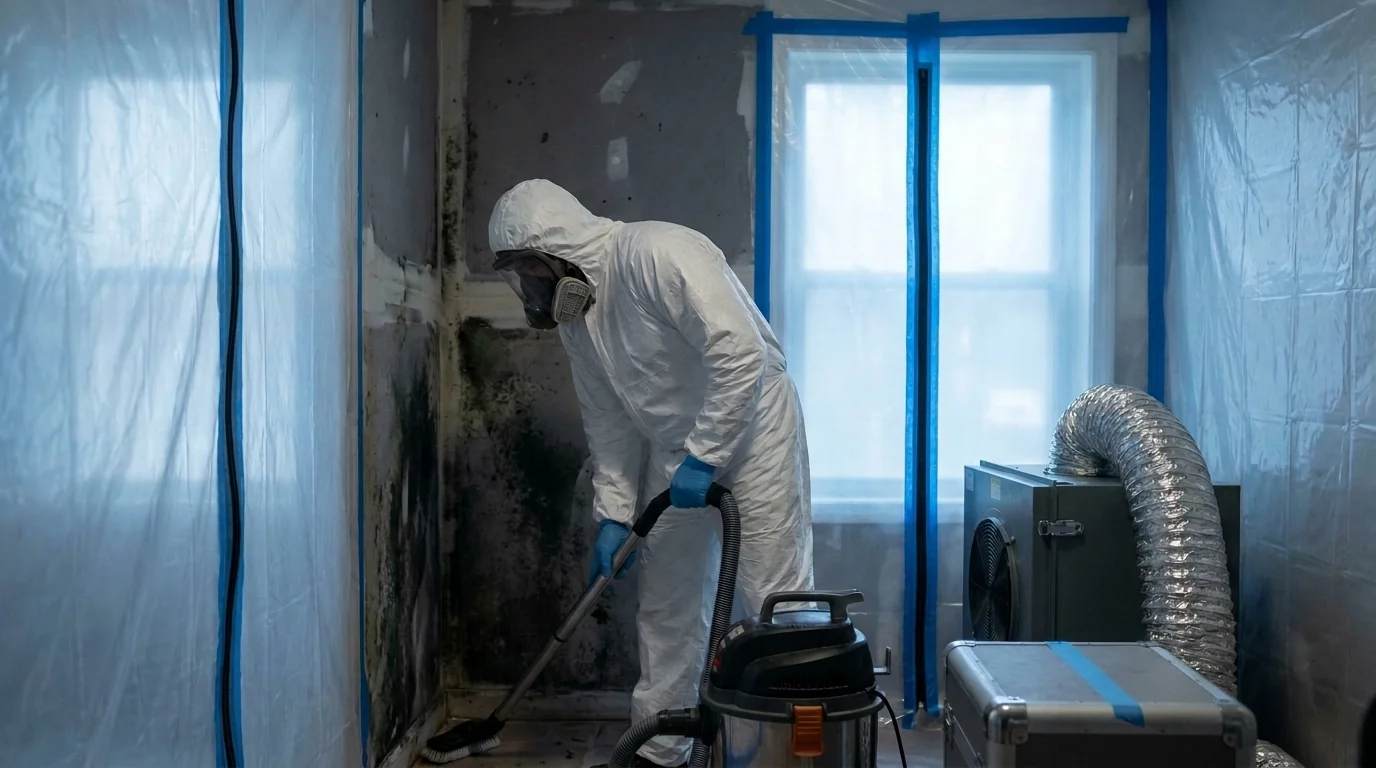
We start with containment: sealing off the affected area with physical barriers and negative air pressure so spores don’t travel into the rest of the house while work is underway, which matters more in rowhouse-style blocks near St. George where units sit close together. From there, our crew removes and bags contaminated porous materials, HEPA-vacuums surfaces, and treats structural wood and masonry with antimicrobial solutions, following the drying and verification steps outlined in the IICRC S520 mold remediation standard. In homes with finished basements, that often means opening up wall cavities behind paneling or drywall that was installed after a past flood repair, since trapped moisture behind a finished wall is one of the most common reasons mold comes back in a space that was supposedly already fixed.
Staten Island Insurance Coordination
A lot of Staten Island mold claims trace back to a flood event rather than a plumbing failure, which matters because standard homeowner’s policies typically exclude flood-caused mold while NFIP flood policies have their own limits on mold remediation coverage. We document the source of moisture, the extent of material damage, and photograph the affected areas before any demolition, which gives you and your adjuster a clear record regardless of which policy ends up covering the claim. For homes that flooded during Sandy or Ida and have had recurring moisture problems since, that documentation history can also help clarify whether the current mold issue traces back to the original event or a separate, newer leak.
Local note
In South Beach and the surrounding East Shore, a number of homes were raised or rebuilt on open foundations after Hurricane Sandy, and the crawlspaces underneath those elevated structures tend to trap humid air against untreated floor joists even when the living space above looks and smells completely fine. We check those crawlspaces with moisture meters as a matter of course on East Shore jobs, because surface-level dryness upstairs doesn’t tell you much about what’s happening under the floor.
If you’re dealing with a musty smell, visible spotting, or a past flood that never quite got fully dried out, in St. George, Tottenville, 10306, 10312, or anywhere else on the island, call The Restoration Group at (844) 808-8838. We answer 24/7, and our IICRC-certified crew can walk you through containment, remediation, and the documentation your insurer will want to see.
Serving Staten Island from our Fair Lawn headquarters — ★ 4.8 · 171 Google reviews
“We would like to take this moment to commend the professionalism and high quality work delivered by The Group. Having fortunately never dealed with a flood in the past this was all very much new to us. They worked with great care protecting our furniture and ensuring all of our goods were…” - Harry, November 2026Read our reviews on Google →
Mold Remediation in Staten Island: Service Coverage
Frequently Asked Questions
How fast can you arrive for mold remediation in Staten Island?
How does Staten Island's flood history affect mold risk in South Beach homes?
Are older frame homes in St. George and Port Richmond more prone to mold problems?
What does mold containment actually involve during remediation?
Will my homeowner's insurance cover mold remediation if the cause was flooding?
Do crawlspaces under elevated homes in Tottenville and Great Kills need special attention during remediation?
Mold Remediation response in Staten Island
Most Staten Island calls see a technician on-site within 60 minutes from our Fair Lawn headquarters.