
24/7 Emergency Water Removal & Cleanup in Manhattan
24/7 emergency water removal and cleanup in Manhattan, NY. IICRC-certified, insurance billing accepted. Call (844) 808-8838.
Our IICRC-certified technicians are dispatched from our Fair Lawn, NJ headquarters and are typically on-site in Manhattan within 60 minutes of your call.
Water coming through the ceiling of a Midtown high-rise, or a riser break flooding a Chelsea co-op at 2 a.m.? Call (844) 808-8838 now, we answer 24/7. Emergency Water Removal & Cleanup in Manhattan almost never starts at ground level: it starts somewhere above you, on a floor you don’t control, and spreads down through finished ceilings before anyone downstairs even knows there’s a problem. Getting water off the floor fast matters, but in a vertical building, getting it out of the walls and ceilings below matters just as much.
Why Manhattan Buildings Flood Differently
Most water emergencies here trace back to the building, not the weather. A failed supply riser, a corroded radiator valve, or a washing-machine hose on a high floor sends water straight down through shared walls and slab penetrations, so the worst damage often shows up one or two floors below the source. Pre-war co-ops on the Upper West Side and Upper East Side carry original cast-iron risers and plaster ceilings that hold water differently than the drywall in a newer Financial District tower, which changes how fast a ceiling needs to come down versus how long it can be dried in place. Storm-driven flooding is the other pattern: Sandy’s surge reached the Financial District and Lower East Side, and Ida’s rainfall overwhelmed storm drains from Harlem down through Chelsea, pushing street and sewer water into basements and ground-floor retail that have no good way to drain on their own.
Our Emergency Water Removal & Cleanup Process in Manhattan
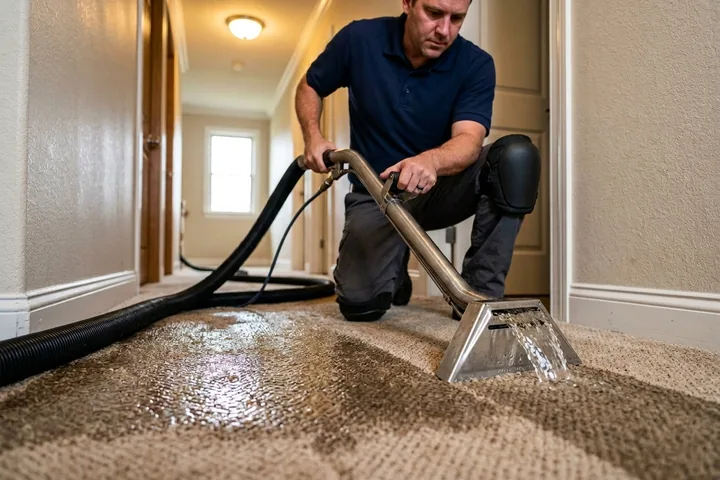
The first call is about stopping the source and protecting the units around the loss, not just the one it happened in. Once water is shut off at the riser or appliance, we extract standing water with truck-mounted and portable units sized for tight stairwells and service elevators, then take moisture readings through the affected ceiling, wall, and floor assemblies rather than relying on a surface check. In a building, that log has to cover every unit touched, not just the one that called, because a board or managing agent will ask for it before signing off on any ceiling opening or drywall removal. Air movers and dehumidifiers go in by unit, and we track drying progress daily until materials read dry per the IICRC S500 standard, not just dry to the touch.
Manhattan Insurance & HOA Coordination
Co-op boards, condo associations, and managing agents run on paperwork, and a water loss doesn’t get fixed faster by skipping it. We provide certificates of insurance before any crew steps into a building, document the loss unit by unit with moisture logs and photos the board or agent can forward to their insurer, and coordinate freight elevator scheduling and building access windows so the work doesn’t collide with the super’s schedule or another resident’s move-in. For ground-floor retail and restaurant spaces, where a closed day is a lost day of revenue, we prioritize getting water out and air moving overnight so the space has a shot at reopening the next business day.
Equipment & Methods We Use for Emergency Water Removal
Extraction equipment has to match the building, not just the loss. Narrow service corridors and older elevators in pre-war buildings mean we stage smaller submersible pumps and portable extractors instead of oversized truck-mounted rigs that can’t make it past the lobby. Injectidry systems let us pull moisture out of wall cavities and under hardwood without demoing every affected surface, which matters in a unit where the board wants minimal disruption to shared walls. Thermal imaging helps locate trapped water behind plaster and tile before we cut, so we open only what actually needs to come out.
Local note
In Midtown and the Financial District, building engineers usually control the main water shutoff for the whole riser line, not the unit owner, so the fastest way to stop an active leak on a high floor is often a call to the superintendent’s office before anyone touches a valve inside the apartment. We’ve learned to ask for that contact first.
Water damage in a Manhattan building moves fast and rarely stays in one unit, so the gap between a leak starting and a crew pulling water out matters. Whether it’s a cracked supply line on the Upper East Side, a flooded basement near the Lower East Side, or a soaked ceiling two floors below a failed riser in Harlem, call (844) 808-8838 and we’ll get extraction and drying moving the same day.
Serving Manhattan from our Fair Lawn headquarters — ★ 4.8 · 171 Google reviews
“Prompt, knowledgeable, skillful and honest. Highly recommend. They remediated within 24 hours. Total peace of mind restored. Worth every penny.” - Anne, October 2026Read our reviews on Google →
Emergency Water Removal & Cleanup in Manhattan: Service Coverage
Frequently Asked Questions
How fast can you arrive for emergency water removal & cleanup in Manhattan?
How does a water leak on a high floor in a Midtown or Financial District building usually get handled?
Do co-op and condo boards in Manhattan require anything specific before you can start work?
Are pre-war buildings on the Upper West Side or Upper East Side harder to dry out than newer towers?
What happened to Lower East Side and Financial District basements during Sandy and Ida, and does that still matter?
How does cost or insurance billing work for an emergency water removal job in a Manhattan unit versus the building's common areas?
Emergency Water Removal & Cleanup response in Manhattan
Most Manhattan calls see a technician on-site within 60 minutes from our Fair Lawn headquarters.