Basement Flooding Cleanup in Linden
24/7 basement flooding cleanup in Linden, NJ. IICRC-certified, insurance billing accepted. Call (855) 650-7422.
Our IICRC-certified technicians are dispatched from our Fair Lawn, NJ headquarters and are typically on-site in Linden within 60 minutes of your call.
When the Rahway River or Morses Creek overtops its banks, as both did during Ida in 2021, low-lying streets in Tremley Point can go from dry to ankle-deep in hours. But most of the flooded basement calls we take in Linden, NJ 07036 aren’t storm events at all: they’re a cast-iron drain that finally gave out under a 1950s split-level, or a supply line that let go behind the utility wall of a finished basement someone converted into a family room twenty years ago. Either way, standing water in a basement starts damaging structural framing, insulation, and drywall within the first few hours, and mold can begin colonizing porous materials in as little as 24 to 48 hours.
Why Linden Properties See Basement Flooding More Than Most
Linden’s housing stock tells the story. The city filled in rapidly after World War II, and the capes, colonials, and split-levels that line the streets of Sunnyside, Bower, and the West End were built between roughly 1945 and 1965. That means original cast-iron drain stacks, galvanized supply lines, and clay sewer laterals are all approaching or past their design lifespan at roughly the same time. When one fails, it rarely fails small, a corroded cleanout fitting or a cracked lateral can dump hundreds of gallons into a finished basement before anyone notices the smell.
Geography compounds the problem. Much of Linden sits on low, flat terrain with a high seasonal water table, and the impervious surfaces along the Route 1 & 9 industrial corridor mean stormwater has nowhere to go during heavy rain. Sump pumps that haven’t been tested since installation are a common point of failure. We also handle a steady volume of commercial losses from the Wood Avenue business district and the industrial belt, sprinkler discharges, overnight pipe breaks, and mechanical-room floods that require rapid extraction before inventory or equipment is destroyed.
Our Basement Flooding Cleanup Process in Linden
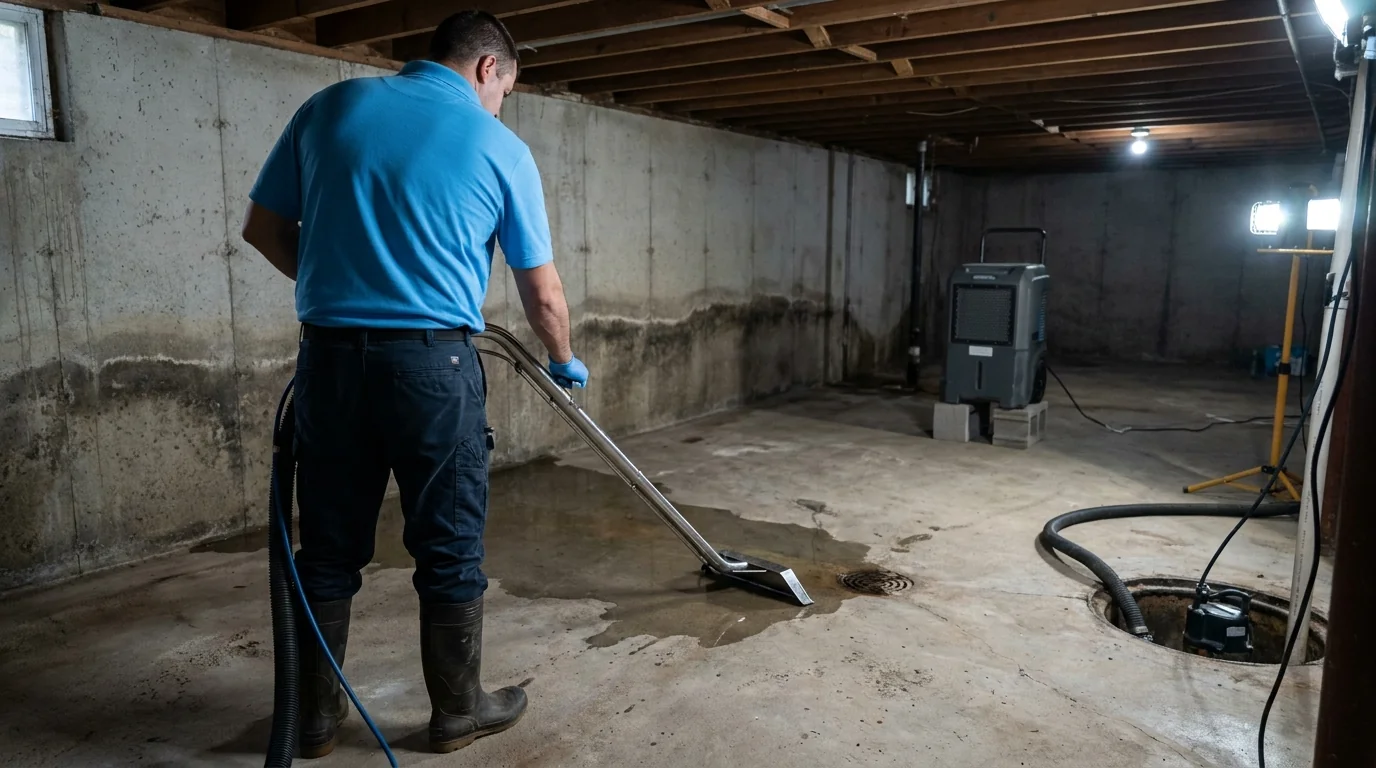
The first thing we do on arrival is assess the water source and stop it if it hasn’t been stopped already. An active supply-line break requires isolation at the shutoff; a backed-up drain may need a plumber on-site before extraction begins. Once the source is controlled, we use truck-mounted and portable extractors to pull standing water, then transition to air movers and industrial dehumidifiers calibrated to the space.
Finished basements, which are extremely common in Linden’s postwar housing stock, require more careful work than open concrete utility spaces. Framed walls with fiberglass batt insulation trap moisture invisibly; we use thermal imaging and moisture meters to map the full extent of saturation before deciding what can be dried in place and what needs to come out. Wet insulation almost always has to be removed. Drywall with wicking damage typically does too. We document every affected material photographically, which matters when you’re filing with your homeowner’s carrier.
Drying timelines in Linden’s older homes run three to five days on average for a contained pipe-break loss in a finished basement. Storm-driven flooding that involves groundwater or sewage contamination takes longer and requires additional antimicrobial treatment, those jobs are classified differently under IICRC standards and handled accordingly by our certified team.
Reaching Linden from Our Kenilworth HQ
Our base in Kenilworth puts Linden a short drive away, typically down Route 28 to the Garden State Parkway or straight through on local roads depending on traffic. We operate 24/7, so whether a pipe lets go at 2 a.m. on a Tuesday or a sump pump fails during a Saturday afternoon storm, you’ll reach a live dispatcher when you call (855) 650-7422. We stage equipment at the truck level, not a warehouse shelf, so response doesn’t wait on a loading process.
For addresses near the Linden Municipal Airport or the Tremley Point waterfront, areas that can see localized flooding independent of what’s happening elsewhere in the city, we’re familiar with the access routes and the types of losses those neighborhoods generate.
Local Note: What Linden’s Postwar Basements Do to Drying Timelines
Here’s something that comes up repeatedly on jobs in Sunnyside and the West End: the original basement walls in many of these homes were finished with a thin layer of plaster over masonry block rather than standard drywall over framing. Plaster absorbs water more slowly than drywall, so it doesn’t always show obvious surface damage, but it also releases moisture more slowly during the drying phase. We’ve seen plaster-on-block walls read elevated on a moisture meter for a full week after the standing water is gone. If a previous contractor dried to visual inspection only and closed the job early, that residual moisture is exactly what feeds a mold problem three weeks later. We meter to IICRC standard, not to appearance.
If your basement is holding water right now, the clock is already running. Call (855) 650-7422, The Restoration Group is NJ licensed and IICRC Certified (Firm #210213), and we’re ready to dispatch to any address in Linden around the clock.
Serving Linden from our Fair Lawn headquarters — ★ 4.8 · 160 Google reviews
“Teams were very prompt and respectful.. company responded quickly and kept in touch” — Peggy, August 2026Read our reviews on Google →
Basement Flooding Cleanup in Linden: Service Coverage
Frequently Asked Questions
How fast can you arrive for basement flooding cleanup in Linden?
How quickly can The Restoration Group reach Tremley Point or other low-lying Linden neighborhoods during a flooding event?
Are finished basements in Linden's 1950s and 1960s homes harder to dry out after flooding?
Does flooding from Morses Creek or the Rahway River change how cleanup is handled compared to a burst pipe?
Will my homeowner's insurance cover basement flooding cleanup in Linden, and how does the claims process work?
How long does basement water removal and drying typically take for a home in the Sunnyside or West End neighborhoods?
Basement Flooding Cleanup response in Linden
Most Linden calls see a technician on-site within 60 minutes from our Fair Lawn headquarters.