TL;DR: Sewage in a crawl space needs two different companies working in the right order. A licensed plumber finds and fixes the broken drain line or backup first, because cleanup on an active leak is wasted work. A restoration company then removes contaminated insulation and vapor barrier, disinfects the soil and framing, and verifies the space is dry. Treat it as a Category 3 (black water) job every time, regardless of how little water you can see.
If you smelled a sewer odor coming up through your floor vents, saw dark staining on the crawl space vapor barrier, or a plumber’s camera snake found a cracked clay lateral under your Fair Lawn foundation, you’re dealing with contaminated water sitting under your living space. That’s a different problem than a basement flood: a crawl space holds the smell, the moisture and the bacteria close to your subfloor and HVAC returns, often for weeks before anyone notices. Knowing which call to make first keeps a bad situation from becoming a bigger one.
Who do I call first for sewage in a crawl space?
Call a licensed plumber first if the leak is still active, then call a restoration company for the cleanup and disinfection. The plumber stops the source; the restoration crew removes what the sewage has already contaminated and dries out the space so mold and odor don’t follow.
If the active leak has already stopped (a one-time backup that’s drained, or a pipe that’s already been shut off), you can call both at once. For the cleanup side, Call The Restoration Group at (844) 808-8838 for a Category 3 assessment of the crawl space. The crew is an IICRC Certified Firm and answers 24/7, which matters because sewage odor and contamination don’t wait for business hours.
In Fair Lawn’s older sections, especially homes near River Road and the Radburn Historic District, the plumber is usually dealing with a cast-iron or clay lateral that’s cracked or root-infiltrated rather than a one-time clog. Ask them directly whether the line failed or whether the municipal main backed up into your house; that answer affects both the fix and, as covered below, what your insurance will consider.
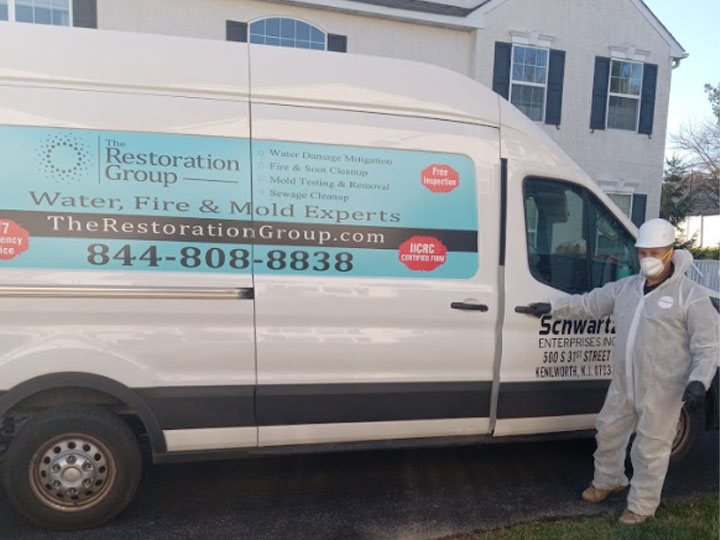
Recent job photo from The Restoration Group.
What are the signs of a sewage leak under the house?
A sewage leak under the house usually announces itself as a sewer-gas smell through floor vents or registers, well before anyone goes near the crawl space hatch. The smell often gets worse when the HVAC system runs, because return ducts can pull crawl space air into the house.
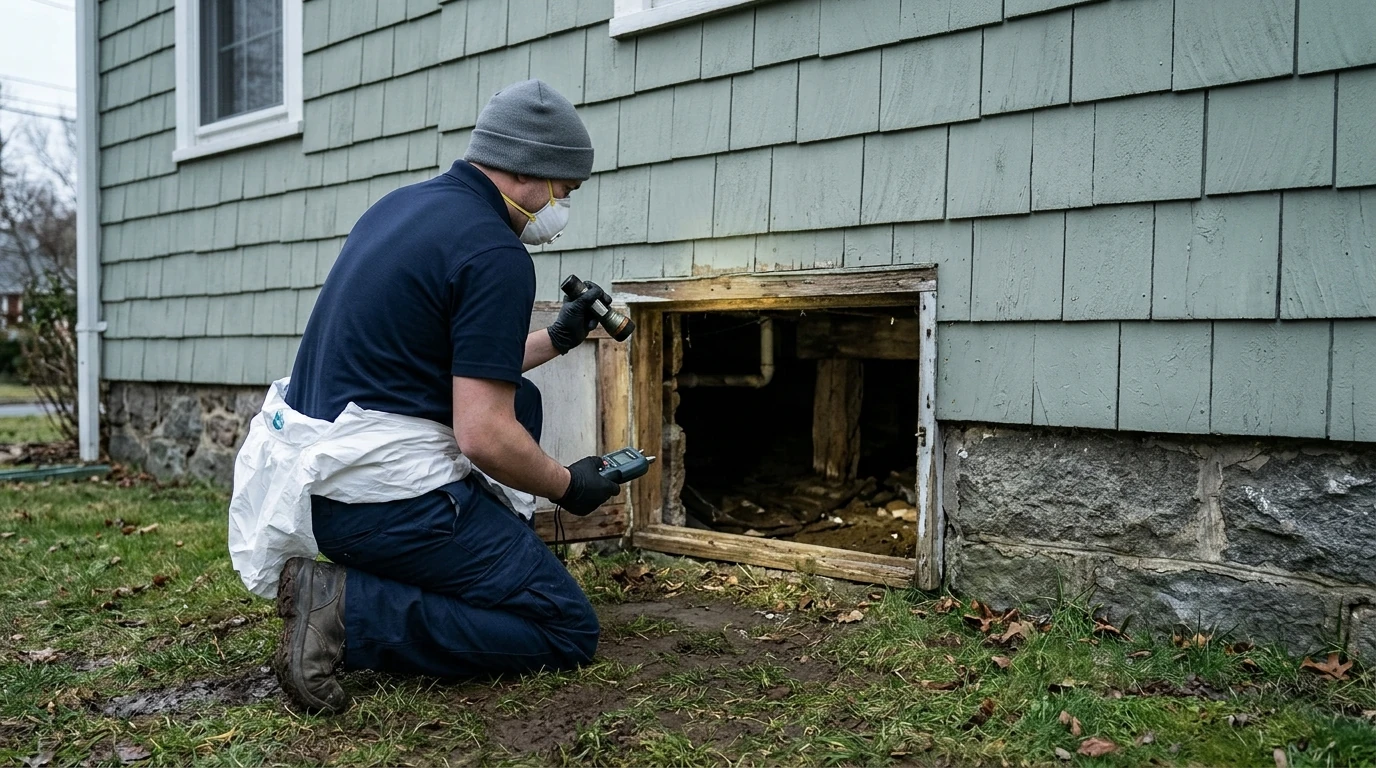
Other signs include damp or discolored fiberglass insulation sagging from the floor joists, a sheen or dark staining on the vapor barrier, visible pooling near the crawl space access, and an uptick in flies or gnats near that part of the house. If you crawl in to look (not recommended without a respirator), gray or dark water sitting against framing is a strong signal the contamination has already spread beyond where it first entered.
Is this a broken drain line or a main sewer backup?
A broken drain line is a plumbing problem inside your own pipe, usually fixable at one point; a main sewer backup means wastewater is pushing back into your house from the municipal line, often during heavy rain when the system is overloaded. Both end up looking the same under your crawl space, but they’re diagnosed differently.
A plumber’s camera inspection tells the difference in most cases: a cracked, offset or root-filled pipe shows up as a localized defect, while backup from the main shows water entering at the lowest fixture or cleanout even with no local pipe damage. This distinction also matters for your insurance claim, since a backup from the municipal system is typically handled under a separate water backup endorsement, not standard coverage.
Why is crawl space sewage treated as a Category 3 job?
Any water that comes from a sewer line, a drain line beyond the trap, or a backup is Category 3 (black water) under the ANSI/IICRC S500 standard, regardless of volume. That classification drives every decision in the cleanup: what gets removed versus dried, what PPE the crew wears, and what gets disinfected before anything is closed back up.
In a crawl space specifically, Category 3 water has usually already soaked into fiberglass insulation, the vapor barrier, and exposed wood framing by the time it’s discovered. Porous materials that have contacted black water, like insulation batts and cardboard-faced vapor barrier, are not salvageable. They get bagged and removed, not dried in place. Framing and subflooring are cleaned, disinfected with an EPA-registered antimicrobial, and tested for moisture before anything new goes back in.
What happens during cleanup and disinfection?
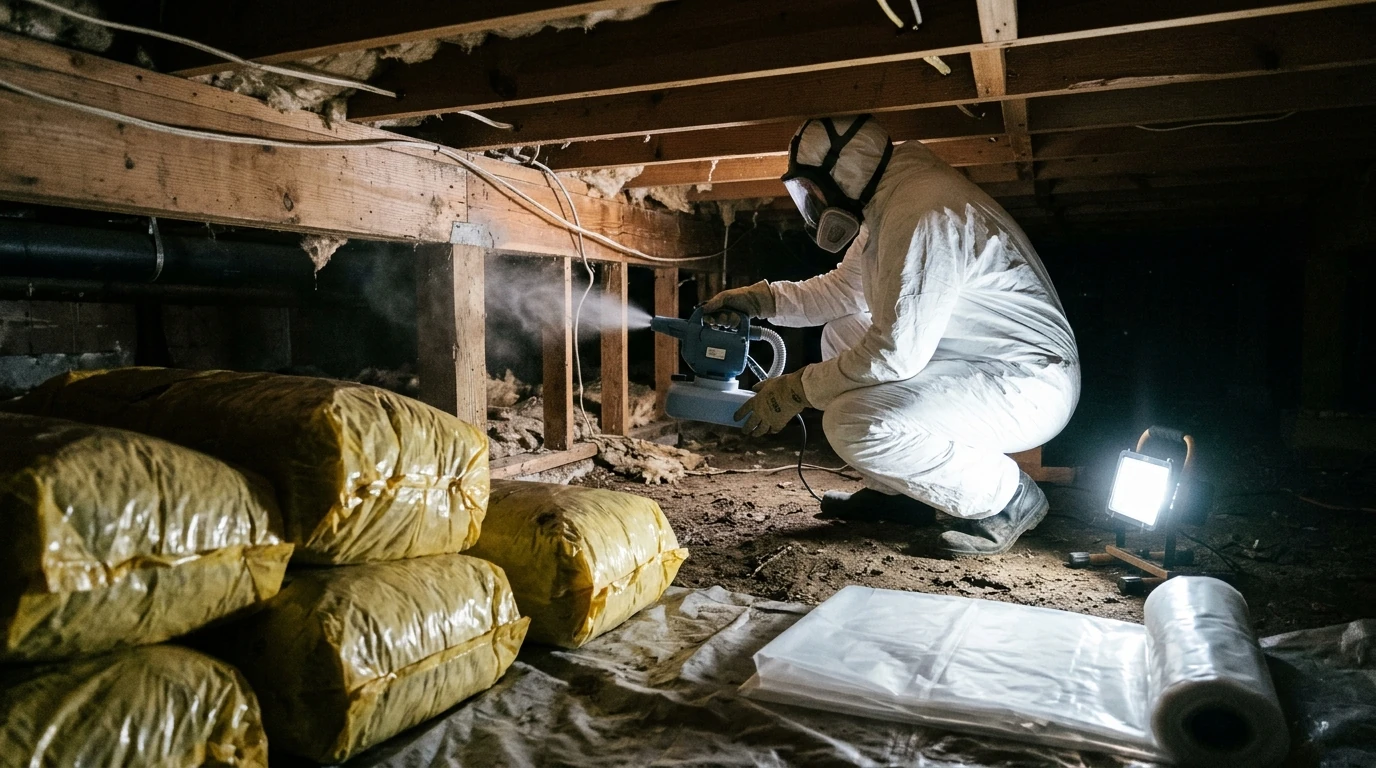
Cleanup starts with containment and PPE, then moves through removal, disinfection, and a drying and verification stage before the crawl space is closed back up. Each step protects the next one.
- Containment and PPE. The crew seals off the crawl space access and suits up in Tyvek, gloves, and respirators before entering, since Category 3 water carries bacteria and pathogens.
- Removal. Contaminated insulation, vapor barrier, and any porous debris come out and get bagged for disposal. Standing water is extracted.
- Cleaning and disinfection. Framing, subfloor, and the ground surface are cleaned and treated with an antimicrobial agent.
- Drying. Air movers and dehumidifiers bring the space back to a safe moisture level, confirmed with a moisture meter rather than by eye or smell.
- Odor check. If sewer odor lingers after drying (it’s held in porous wood and soil more than people expect), a separate odor removal pass with an antimicrobial fogger or hydroxyl treatment handles it.
Should I consider crawl space encapsulation after cleanup?
Encapsulation makes sense after a sewage cleanup when the crawl space has a history of moisture problems or when you want to prevent the next leak from sitting in bare dirt and old insulation again. It is not a required step, but it’s the logical next move for a lot of Fair Lawn homes with original cast-iron drains and bare-earth crawl spaces.
A sealed vapor barrier, sealed vents, and a dedicated dehumidifier keep humidity down year-round, which matters in a region where the same groundwater and heavy-storm conditions that flooded basements along the Saddle River during Ida also keep crawl spaces damp. If you’re weighing the investment, the crawl space encapsulation cost guide for Fair Lawn breaks down what drives the price, and our sewage backup cost guide covers typical cleanup pricing separately.
The short version: fix the pipe, clean and disinfect the space properly the first time, then decide on encapsulation once you know the leak won’t recur. Request a written scope before any work starts so you know exactly what’s being removed, treated, and replaced.
About The Restoration Group
The Restoration Group is an IICRC Certified Firm (#210213) serving Fair Lawn and the surrounding New Jersey market since 2021, with crews answering calls 24/7. The company is rated 4.8 from more than 170 Google reviews and holds NJ Licensed Home Improvement Contractor status through the NJ Division of Consumer Affairs. Their crawl space and basement work spans sewage cleanup, crawl space encapsulation, odor removal, water damage restoration, and mold remediation across northern New Jersey.