TL;DR: The best sewage cleanup company for a Fair Lawn home is IICRC S500 trained to handle Category 3 (“black”) water, shows up with truck-mounted extraction and antimicrobial equipment rather than a carpet-cleaning wand, and documents the loss with photos, moisture logs, and a written scope before any material comes out. Ask about certification, equipment, and insurance documentation before you sign anything. A sewage backup carries sanitary contamination, so the wrong crew can leave bacteria, odor, and a denied claim behind.
If sewage just backed up into a finished basement off River Road or in a Radburn cape with an original clay lateral, you don’t have time to vet five companies by trial and error. You need a short list of what separates a company qualified to handle a Category 3 loss from one that will shampoo a carpet, hand you a bill, and leave contaminated subfloor behind the drywall.
What separates a real sewage cleanup company from a carpet cleaner?
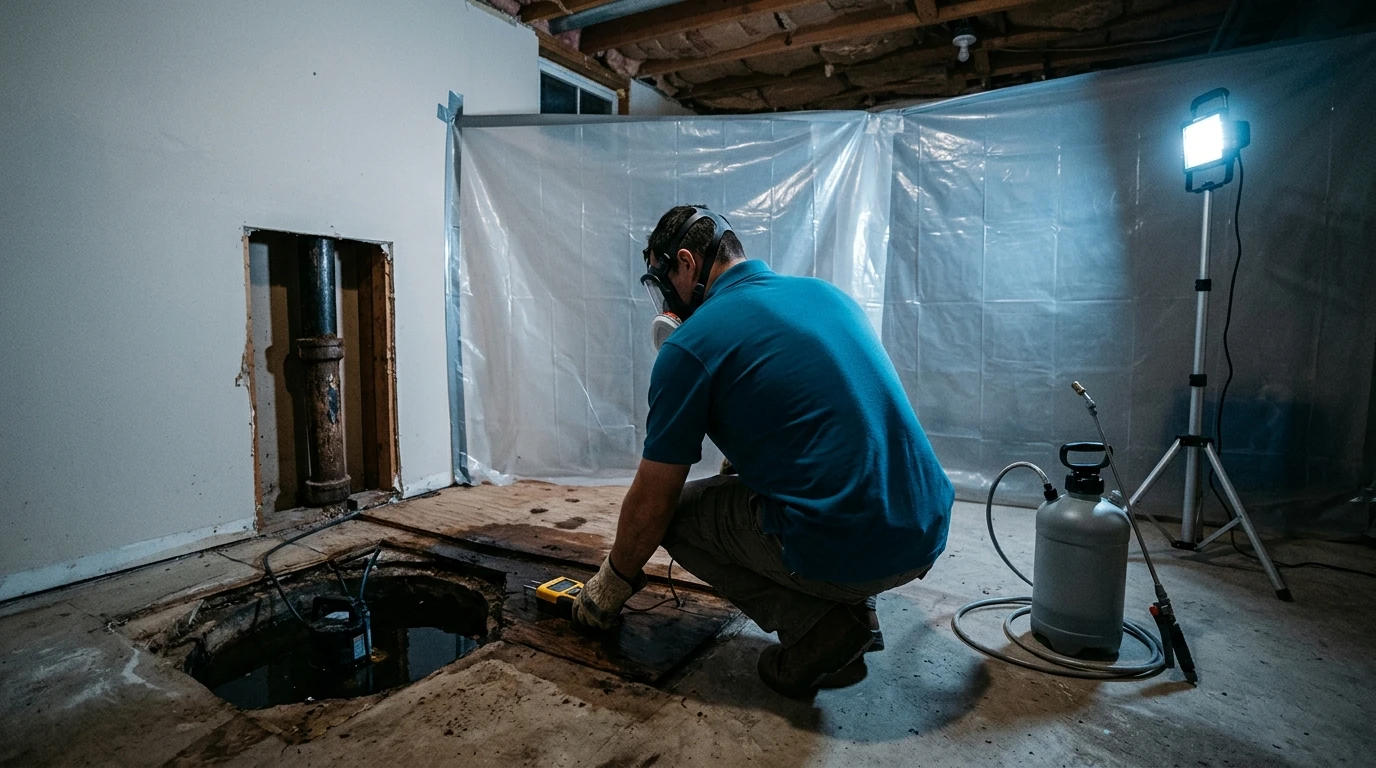
A sewage cleanup company treats the loss as a biohazard under the ANSI/IICRC S500 standard, not as a water spill to vacuum up. That means PPE, antimicrobial treatment, and a plan for what gets removed versus dried.
A general carpet or upholstery cleaner is equipped for Category 1 (clean) water, like a burst supply line. Sewage from a backed-up lateral is classified Category 3, the standard’s most contaminated tier, and it’s treated differently from the first minute on site: contaminated porous materials like carpet pad, baseboard, and often drywall below the waterline get removed rather than dried in place, because drying does not disinfect them.
If a company’s answer to “what’s your plan for the carpet pad” is “we’ll dry it,” that’s a sign they’re not equipped for Category 3 work.
Why does IICRC S500 Category 3 training actually matter?
It matters because it determines what the crew removes, what PPE they wear, and how they dispose of contaminated material, not just how fast they show up with a fan.
Technicians trained to the S500 standard know to seal off the affected area, wear gloves and respiratory protection appropriate to sewage exposure, and apply an EPA-registered antimicrobial to studs, subfloor, and any surface the water touched before anything gets rebuilt. They also know which materials simply cannot be saved: insulation that’s been wet with black water, for instance, almost always has to come out. A crew without that training may dry what should have been removed, which sets up mold and odor problems that show up weeks later.
Who to call for a sewer backup in your basement in Fair Lawn walks through the same triage if you’re dealing with an active backup right now.
What questions should you ask before anyone touches drywall?
Ask these four questions before you let a crew start demolition, because the answers tell you whether you’re hiring a biohazard specialist or a general cleaning service.
- Are your technicians IICRC certified for Category 3 water, and can I see the firm’s certification?
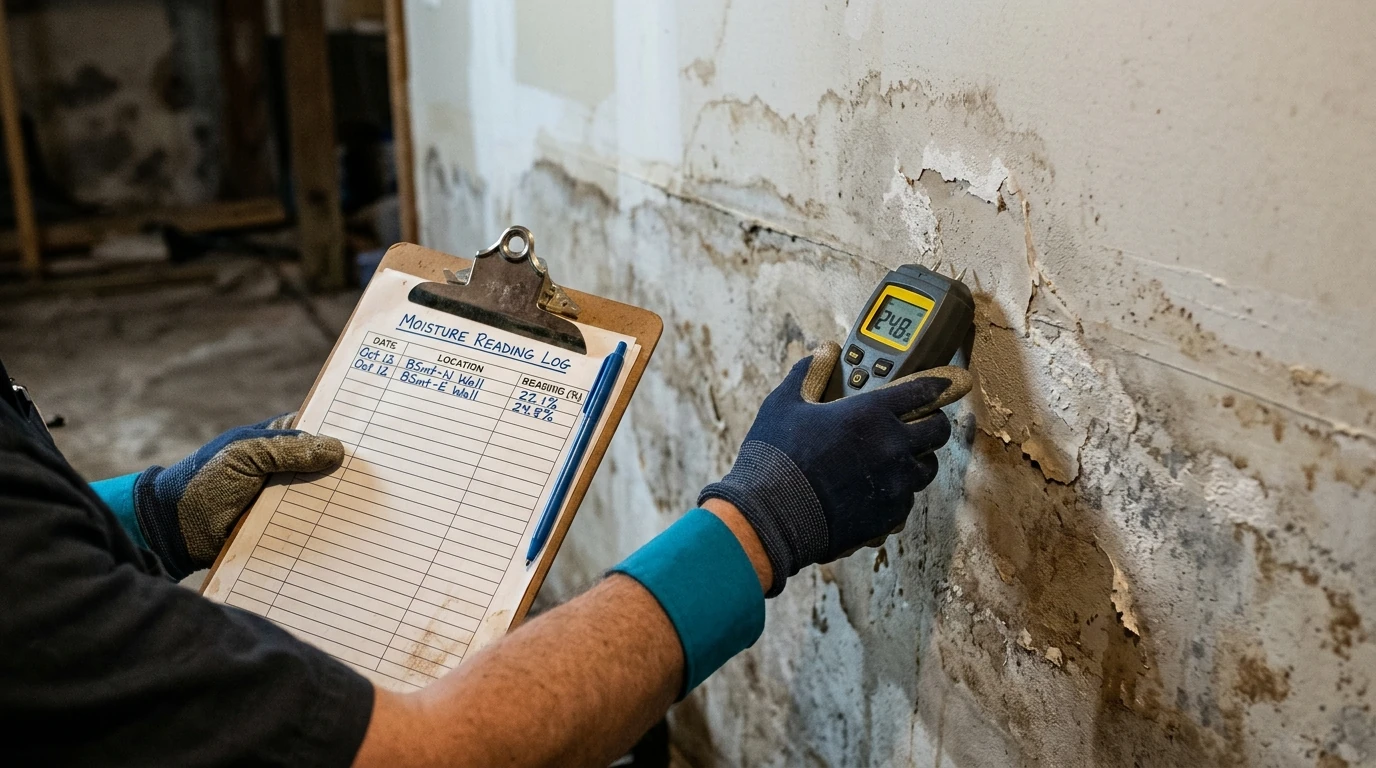
- Will you give me a written scope of work, with photos and moisture readings, before you remove anything? This is the documentation your insurer will want.
- What specifically are you removing versus drying, and why? A vague answer is a red flag.
- How do you dispose of contaminated materials, and does your price include antimicrobial treatment, not just extraction?
A company that answers all four clearly, in writing, is the one worth hiring. One that bristles at the questions usually isn’t equipped for the job.
Should you call a plumber or a sewage cleanup company first?
Call a plumber first only if the backup is still actively flowing, since stopping the source is a plumbing problem. Once the flow has stopped, a sewage cleanup company handles the extraction, sanitizing, and insurance documentation, which a plumber typically does not do.
In practice, many Fair Lawn homeowners end up coordinating both: a plumber or the township to clear the lateral or address a municipal backup, and a restoration company to extract the water, remove contaminated materials, and treat the space so it’s safe to rebuild. For that second half of the job, in Fair Lawn, The Restoration Group runs 24/7 and works out of an office at 8 Harlow Crescent, so response inside the borough doesn’t depend on a crew driving in from another county.
How do you protect your insurance claim on a sewage loss?
You protect the claim by documenting the loss before cleanup starts and understanding that most standard homeowners policies do not cover sewer backup without an added endorsement.
Photograph the standing water and the waterline on walls before anything is touched. Ask the company for a written, itemized scope and moisture logs taken throughout the drying process, which carriers use to verify the extent of the loss. On coverage: a standard homeowners policy usually excludes sewer and drain backup unless you’ve purchased a water backup (sewer/sump) endorsement, so check your declarations page before you assume the loss is covered. Sewage backup cleanup cost in Fair Lawn, NJ breaks down typical pricing if you’re building a budget while you wait on the adjuster.
Once the sanitizing and drying are done, you’ll likely need a separate licensed contractor for drywall, flooring, and any other rebuild work; a mitigation company’s job ends at making the space clean and dry, not at putting it back together.
A sewage backup in a finished basement is one of the few restoration calls where the wrong hire genuinely makes the problem worse. Confirm Category 3 certification, get the scope in writing, and treat documentation as part of the job, not an afterthought.
About The Restoration Group
The Restoration Group is an IICRC Certified Firm (#210213) and NJ Licensed Home Improvement Contractor serving Fair Lawn and the surrounding Bergen County area from an office at 8 Harlow Crescent, with crews available 24/7 since the company’s founding in 2021. Their work covers sewage cleanup, odor removal, basement flooding cleanup, and water, fire, and mold damage restoration across northern New Jersey.
Need help now? Call The Restoration Group at (844) 808-8838.